Türkçe
 September 19, 2026

mesaj bırakın
Ürünlerimizle ilgileniyorsanız ve daha fazla ayrıntı öğrenmek istiyorsanız, lütfen buraya bir mesaj bırakın, en kısa sürede size cevap vereceğiz.


A seawater flake ice machine is designed to use seawater directly as feed water, producing flake ice on board or at coastal sites without carrying freshwater. The material choice is the critical difference: SUS316 or SUS316L on wetted parts, not SUS304, because chloride ions in seawater cause pitting and stress corrosion cracking in standard stainless steel. Marine installations also need a water system that remains stable under vessel motion and a condenser matched to seawater cooling.
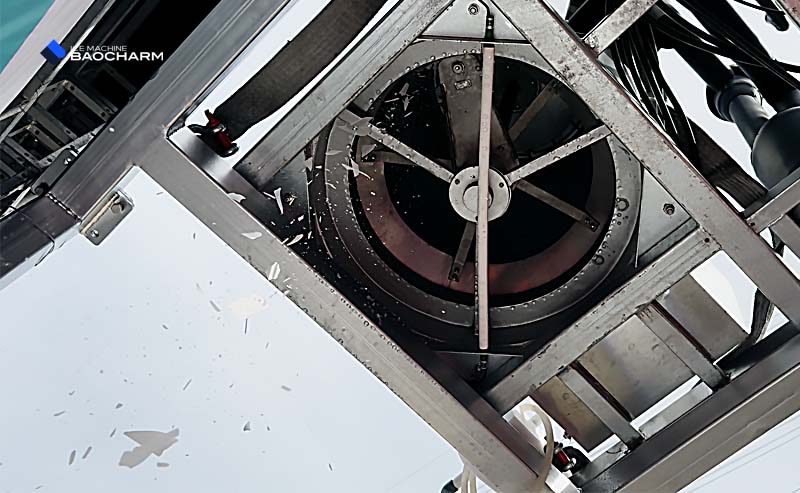
A seawater flake ice machine uses seawater as the feed water for ice production. The refrigeration and scraping principle is the same as a freshwater machine; the difference is in material selection, water circuit design and, for vessel installations, structural stability.
The attraction is logistical. Carrying freshwater ice from land consumes cargo space, adds weight and melts during long transits. Generating ice at sea from seawater removes that dependency. For fishing vessels and coastal ports where freshwater is limited or expensive, direct seawater feed changes the economics of on-board cooling.
The constraint is corrosion. Seawater contains chloride ions that attack standard stainless steels. SUS304, which performs well in freshwater and general food-duty environments, can suffer pitting and stress corrosion cracking when exposed to warm, concentrated seawater over time. The material specification is not a minor option; it is the condition that makes direct seawater feed viable.
SUS316 and SUS316L contain higher nickel and molybdenum levels than SUS304, which improves resistance to chloride-ion corrosion. In marine-series machines, these grades are used for the evaporator interior, ice cutters and water distribution tray — the surfaces in continuous contact with seawater and ice.
| Feed water | Wetted material | Corrosion protection | Typical installation |
| Freshwater | SUS304 baseline | Standard food-grade hygiene | Land-based processing, batching plants |
| Seawater / coastal | SUS316 / SUS316L on wetted parts | Chloride-resistant metallurgy; sealed electricals | Fishing vessels, coastal ports |
| Corrosive process environment | SUS316 where specified | Material matched to chemical exposure | Chemical or industrial sites |
Material selection should be confirmed against water analysis and expected chloride exposure. This table is a configuration guide, not a universal specification.
| Environment | Recommended grade | Reason |
| Freshwater, food processing, general industrial | SUS304 | Adequate corrosion resistance; cost-effective baseline |
| Seawater feed, marine air, coastal humidity | SUS316 / SUS316L on wetted parts | Resistance to chloride-driven pitting and stress corrosion |
| Corrosive chemical exposure | SUS316 where compatible | Higher alloy content for aggressive environments |
SUS304 remains appropriate for freshwater duty. The upgrade to SUS316 is driven by chloride exposure, not by a general preference for a higher grade.
A marine flake ice machine on a fishing vessel faces motion, vibration and a moving water supply. A standard land-based water tank can slosh under roll and pitch, causing uneven water feed, freeze-up jams or compressor liquid slugging. Marine-series machines address this with enclosed, baffled water basins, electronic level sensing instead of mechanical floats, and vibration-resistant compressor mounting.
Seawater salinity and feed temperature also affect operation. Standard ocean salinity ranges from roughly 20‰ to 35‰, and feed water in tropical waters can reach 30°C. The machine configuration should be matched to the expected salinity range and feed temperature, not to a single “seawater” label.
For land-based coastal installations, motion requirements are absent, but the corrosion environment is not. Coastal humidity and salt-laden air affect electrical enclosures, fasteners and condenser materials as well as the wetted parts. The installation review should include the full machine, not only the evaporator.
Useful inputs for a seawater or marine configuration review:
The selection logic for freshwater machines is covered in the pillar guide Industrial Flake Ice Machine Selection and Buying Guide: From Ice Type to Full-System Fit; the working principle is covered in How a Flake Ice Machine Works: Vertical Inner-Scraping Evaporator and Ice Blade Explained.
Can a seawater flake ice machine use seawater directly?
Yes, provided the wetted parts are specified for chloride exposure. SUS316 or SUS316L is used for the evaporator interior, ice cutters and water distribution tray. SUS304 is not the appropriate grade for continuous seawater feed because chloride ions can cause pitting and stress corrosion cracking.
When is 316 stainless steel needed?
SUS316 or SUS316L is needed when wetted parts are exposed to seawater, concentrated brine or a chloride-containing process environment. For freshwater and general food-duty applications, SUS304 is the baseline and remains appropriate.
What marine configuration is needed for fishing vessels?
Beyond material grade, vessel installations need a motion-resistant water system: enclosed, baffled water basins, electronic level sensing and vibration-resistant compressor mounting. The condenser and electrical enclosures should also be matched to the marine environment.
Talk to a marine application engineer about seawater feed, SUS316 wetted parts and vessel installation requirements. → Speak to a marine engineer


İletişim Bilgilerimiz
E-posta: sales@baocharm.com
WhatsApp: +86 17663537579
Wechat: +86 17663537579
Çalışma Saatleri: Pazartesi ~ Cumartesi 08:30 - 17:30
 IPv6 ağı destekleniyor