Türkçe
 September 19, 2026

mesaj bırakın
Ürünlerimizle ilgileniyorsanız ve daha fazla ayrıntı öğrenmek istiyorsanız, lütfen buraya bir mesaj bırakın, en kısa sürede size cevap vereceğiz.


A flake ice machine produces ice continuously, not in batches. Water is distributed as a thin film on the inner wall of a vertical evaporator cylinder. Refrigerant evaporates in the jacket outside that wall, freezing the water film almost instantly. A rotating ice blade scrapes the frozen layer off as thin, dry flakes, and unfrozen water returns to the tank. The result is sub-cooled flake ice with a very high surface area — the property that makes it a rapid heat-removal medium.
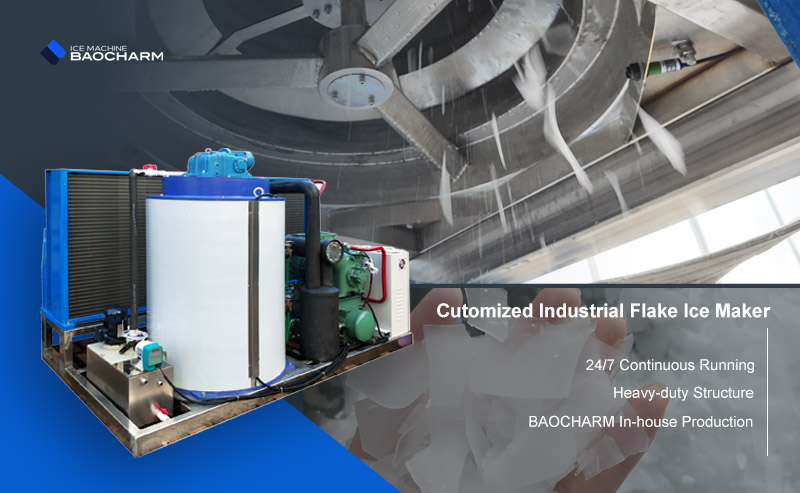
A flake ice machine is a continuous-cycle machine. Water flows inside an enclosed cylinder; heat is removed through the wall; the frozen layer is scraped off and falls to the bin without waiting for a batch to be harvested. The sequence is:
There is no “wait for the block to freeze, then release it” phase. This is why flake ice output responds quickly to changes in load, and why the ice is sub-cooled and relatively dry rather than wet and blocky.
Three variables control flake thickness and dryness:
Water film thickness. A thin, uniform film freezes through quickly; a thick or uneven film produces wet, soft flakes. The distribution tray and pump flow rate set this variable.
Evaporator wall temperature and refrigerant charge. If suction pressure is low or refrigerant charge is marginal, the wall runs warmer than design, and the ice layer is thinner and wetter. A partial refrigerant leak can produce exactly this symptom — output falls and flakes carry excess water.
Blade condition and clearance. A worn blade or incorrect clearance leaves a residual ice layer on the wall. That layer insulates the freezing surface and degrades heat transfer, so subsequent flakes become soft and production drops over time.
The evaporator is the component where these variables meet. Its material also determines corrosion resistance: SUS304 is the freshwater baseline, while SUS316 or SUS316L is used where chloride exposure is expected.
| Component | Function | Selection note |
| Evaporator cylinder | Freezing surface; heat transfer wall | SUS304 baseline; SUS316 / SUS316L for seawater or corrosive duty |
| Ice blade assembly | Scrapes frozen layer from the inner wall | Blade structure can be customized to duty; wear affects dryness |
| Water distribution tray | Spreads water into a uniform film | Plugging or uneven flow causes wet, soft flakes |
| Main shaft and seal | Drives the blade; seals the refrigerant circuit | Seal condition affects refrigerant retention and service life |
| Water tank and pump | Recirculates unfrozen water | Flow rate affects film thickness and flake quality |
Component selection is matched to water source, duty cycle and installation environment. This table is a configuration aid, not a universal parts list.
The continuous scraping principle has two consequences for buyers.
First, capacity is tied to evaporator area and refrigeration duty, not to a batch volume. A machine with a larger evaporator and matched compressor produces more tons per day without changing the freezing logic. This is why capacity correction for ambient and inlet water conditions matters: the same evaporator area delivers less ice when the refrigeration system has to work against a higher heat-rejection burden.
Second, the evaporator and blade are the customization points. A heavier blade structure may suit continuous high-load operation; a different stainless grade may suit a corrosive atmosphere or seawater feed. These decisions should be made against the actual water analysis and duty profile, not selected from a generic option list.
If the process also requires long-duration cold retention, flake ice is not a substitute for block ice. The two ice types solve different problems; the comparison is covered in Flake Ice Machine vs Block Ice Machine: Which Ice Type Fits Industrial Cooling and Preservation?.
How does a vertical inner-scraping evaporator form flake ice?
Water is spread as a thin film on the inner wall of a vertical cylinder. Refrigerant evaporates outside the wall and freezes the film. A rotating blade scrapes the frozen layer off continuously, and unfrozen water recirculates. The result is thin, sub-cooled flake ice produced without a batch harvest cycle.
What affects ice blade wear?
Blade wear is influenced by the duty cycle, water quality, the hardness of the frozen layer and the blade material. A worn blade leaves a residual ice layer on the evaporator wall, which reduces heat transfer and can make flakes wetter and softer. Blade inspection should be part of routine maintenance.
Why is flake ice thin and relatively dry?
Flake thickness is set by the water film, evaporator wall temperature and blade clearance. When these are in balance, the ice freezes through quickly and is scraped off before it becomes wet and slushy. Dry flake ice is a sign that the evaporator, refrigerant charge and water distribution are working together.
Ask for the evaporator and blade customization sheet for your duty. Share your water source, capacity target and installation environment to review material grade and blade structure. → Request customization options


İletişim Bilgilerimiz
E-posta: sales@baocharm.com
WhatsApp: +86 17663537579
Wechat: +86 17663537579
Çalışma Saatleri: Pazartesi ~ Cumartesi 08:30 - 17:30
 IPv6 ağı destekleniyor